
Choosing reliable metal fence panels from China requires more than comparing factory prices. Importers must examine material grades, welding quality, surface treatment, production capacity, and export experience. A low quotation may hide thinner steel, uneven galvanizing, or weak packaging. These details often appear only after containers arrive.
This guide introduces ten Chinese manufacturers serving international buyers of metal fence panels. It focuses on practical evidence, including product ranges, customization options, quality procedures, certifications, lead times, and communication standards. Factory visits, sample inspections, and shipment records can provide stronger confidence than polished online catalogs. Buyers should also confirm whether a supplier manufactures products directly or relies heavily on subcontractors.
The ranking is not absolute. A manufacturer suitable for highway barriers may not fit a residential project. Local climate, fence height, coating requirements, installation methods, and destination standards all affect the final choice. Even experienced importers can overlook small issues, such as missing accessories, unclear tolerances, or incomplete pallet protection. That is worth remembering.
By comparing these suppliers carefully, importers can narrow their shortlist and ask more useful questions before placing an order. The strongest partnership usually combines stable quality, transparent pricing, responsive technical support, and realistic delivery commitments. Independent testing and pre-shipment inspection remain sensible safeguards, especially for large projects. This article offers a starting point, not a substitute for due diligence.
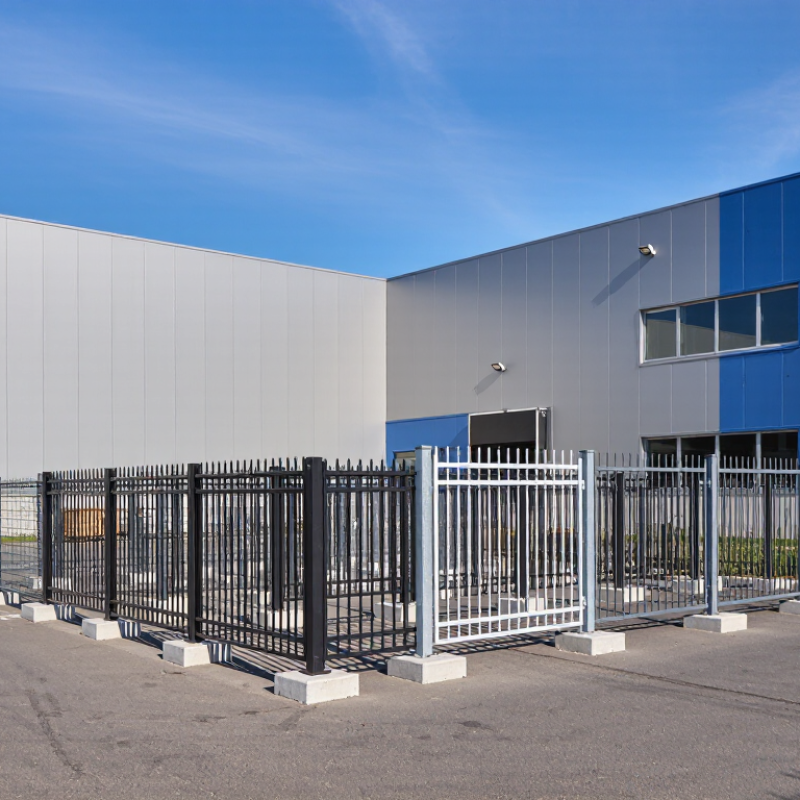
China’s metal fence panel manufacturing landscape is broad, export-oriented, and highly specialized. Factories commonly produce welded wire panels, ornamental steel sections, temporary barriers, and heavy-duty security fencing. Many suppliers use galvanized steel wire, robotic welding equipment, and powder-coating lines. These processes improve consistency, but results still depend on supervision.
The strongest manufacturers usually control several stages in-house. They cut wire, weld panels, treat surfaces, and package finished orders under one production system. Importers should inspect mesh spacing, wire diameter, frame thickness, and coating adhesion. A small measurement error can affect installation across an entire project. Factory audits, sample approvals, and batch inspection remain practical safeguards.
Production capacity varies sharply between suppliers. Some workshops handle customized gates and low-volume orders well. Larger facilities may offer automated lines, container planning, and stable monthly output. Yet large capacity does not guarantee careful workmanship. A catalogue photo can hide uneven welds or thin coatings. That deserves attention.
Reliable cooperation also depends on documentation. Buyers should request material certificates, coating specifications, packing details, and realistic lead times. Clear drawings reduce disputes over dimensions and mounting holes. Weather conditions matter too; coastal projects may require stronger corrosion protection than inland sites. Pricing alone gives an incomplete picture. Supplier selection should balance engineering control, communication, inspection access, and long-term replacement needs.
Factories commonly produce welded wire panels, decorative steel sections, temporary barriers, and heavy-duty security fencing. Some offer gates and posts too.
Ask about galvanized steel wire, steel grade, wire diameter, and frame thickness. Check whether welding is robotic, manual, or mixed. Supervision still matters.
Request samples from at least three factories. Measure mesh openings with calipers. Inspect weld penetration, corner strength, coating coverage, and packaging. A catalogue photo proves little.
Request material certificates, coating specifications, dimensional drawings, packing details, and realistic lead times. Production records can improve traceability. Certificates are not enough alone.
No. Large facilities may offer automated lines and stable output. Smaller workshops may handle custom gates more carefully. Capacity is not workmanship.
Ask for zinc thickness, powder-coating details, adhesion results, and salt-spray data. Coastal sites may need stronger corrosion protection. Weather changes the specification.
Compare total landed cost, including tooling, inland transport, duties, packaging, and possible damage. A low quotation can hide thin coatings or unsuitable dimensions. Cheap can become expensive.
Confirm minimum order quantities, monthly capacity, lead times, port arrangements, loading plans, and replacement procedures. Use pre-shipment inspection for an initial order. It costs money. It may prevent a larger mistake.
China has become a major manufacturing hub for metal fence panels, offering importers a broad range of products for residential, commercial, industrial, and infrastructure projects. This article examines the country’s manufacturing landscape and explains how leading suppliers can be assessed through factors such as production capacity, material quality, fabrication technology, export experience, customization capability, and quality-control systems. It presents an overview of ten notable manufacturer types without focusing on brand names, helping readers understand the strengths commonly found across China’s fencing industry.
The article also explores popular materials, including galvanized steel, aluminum, and powder-coated finishes, along with options for dimensions, colors, surface treatments, security levels, and installation methods. For importers, practical guidance is provided on comparing quotations, verifying specifications, requesting samples, reviewing certifications, confirming packaging standards, and communicating shipping requirements. By using a structured sourcing process and evaluating suppliers carefully, buyers can identify suitable metal fence panels that balance durability, appearance, compliance, lead time, and overall purchasing value.
